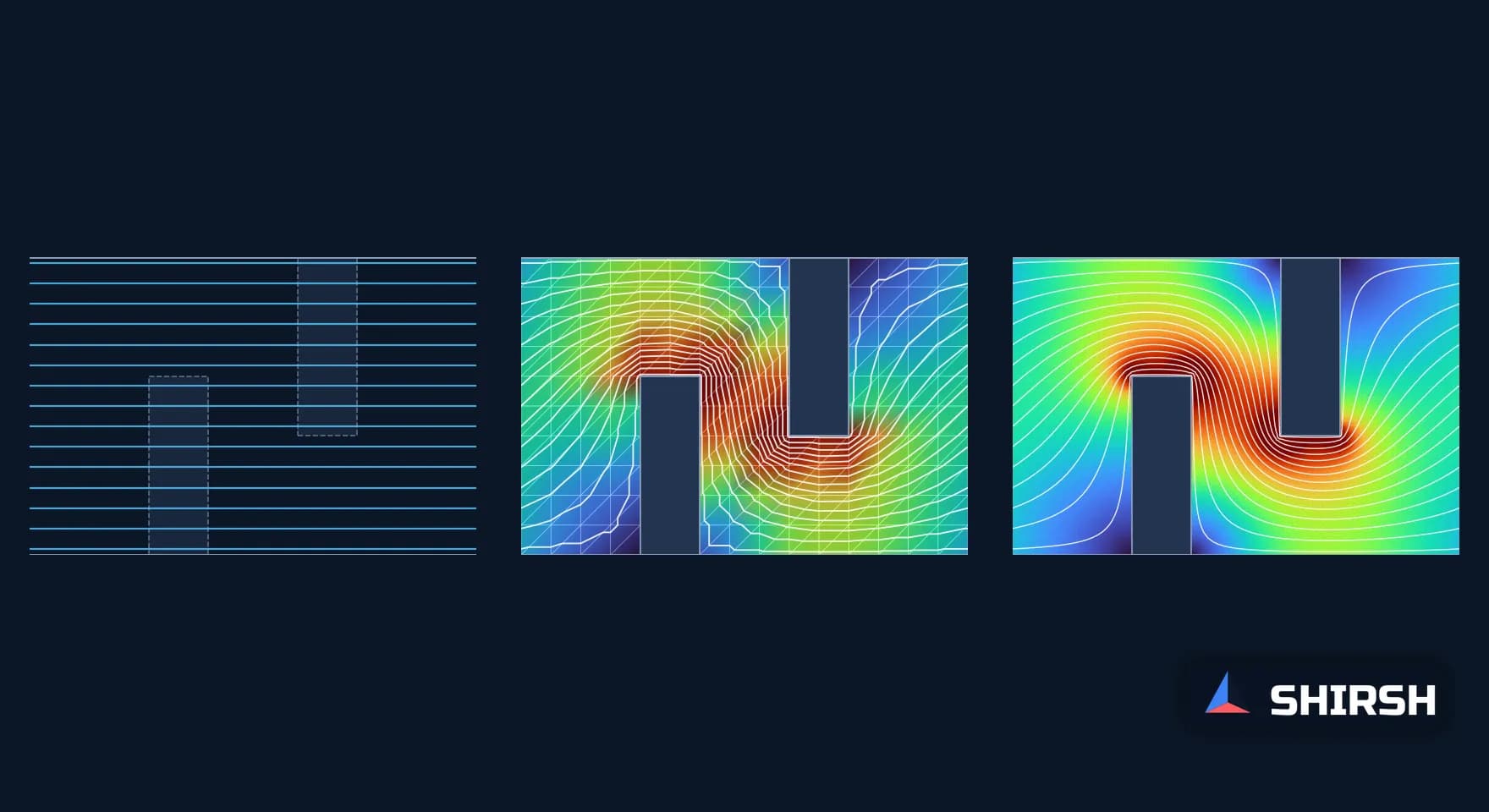
Hand Calc, Quick CFD or Full Study: Matching Effort to the Decision
A store room ventilation check and a Grade A sign-off can both be called a CFD job, yet they deserve very different effort. I think the decision a result will carry should set the level of analysis. Here is how I choose between a hand calculation, a quick run and a full study.
On a new enquiry, one of the first things I ask is what decision the result will be used for. The answer usually tells me more about the right scope than the drawings do. A ventilation check for a store room and a sign-off on a Grade A filling zone can both be described as "a CFD job". They deserve very different amounts of work.
Projects go wrong at both ends. Some studies are far bigger than the question needs, and the client pays for weeks of meshing to confirm what a page of arithmetic would have shown. Others stop at a hand calculation that cannot see the effect that decides the outcome. Here is how I choose the level.
1. Start from the decision, not the tool
The medical device world has written this down more clearly than most of us in industry. ASME V&V 40-2018 asks the analyst to define a context of use and then assess model risk from two things: model influence, which is how much the simulation contributes to the decision, and decision consequence, which is what happens if the simulation turns out to be wrong. The verification and validation effort is then set commensurate with that risk.
NASA-STD-7009B, the agency's Standard for Models and Simulations approved in March 2024, takes a similar line. Whether a model falls within its scope depends on the criticality of the situation the model supports, and that criticality informs the thresholds its credibility assessment has to meet.
Neither document was written for building services or steel structures, but the logic carries over. Before choosing between a spreadsheet and a solver, I want to know how much weight the number will carry and what a wrong one would cost.

How I map the level of analysis onto the two questions ASME V&V 40 asks. The boundaries are a judgement made with the client, not a rule.
2. When a hand calculation is the right answer
A hand calculation is the right tool when the physics is well described by an average and the margin is comfortable. Energy balances, pressure drop through a known network, dilution in a space that really is well mixed, a member check against a code formula: these have closed forms because the problem allows them.
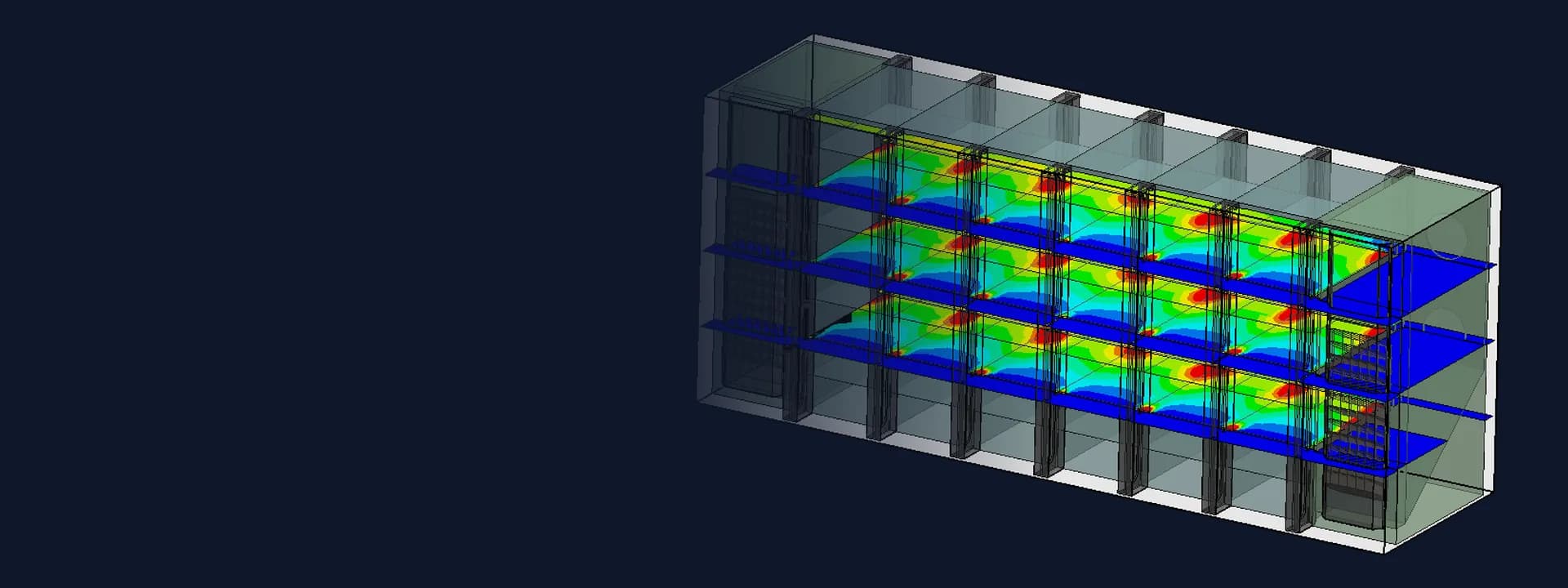
In our liquid cooling Insight, the coolant temperature rise on a 5 kW cold plate came straight from an energy balance, 9.01 K at 8 L/min of water and 16.17 K at 4.46 L/min. No CFD model would have improved those figures. The same study found that with 10 kPa plates the flow spread across eight branches fell to 1.01% of the mean. When component losses dominate to that extent, a one-dimensional network with honest loss coefficients gives the split, and a CFD model of the headers adds little.
I attach one condition. The hand calculation has to carry its assumptions next to it. A dilution calculation assumes the space is mixed. Written down, that assumption can be challenged by a reviewer. Buried, it quietly becomes the design.
3. When the average hides the answer
The case for CFD begins when the decision depends on where something is, rather than on how much of it there is. Our published studies keep coming back to this.
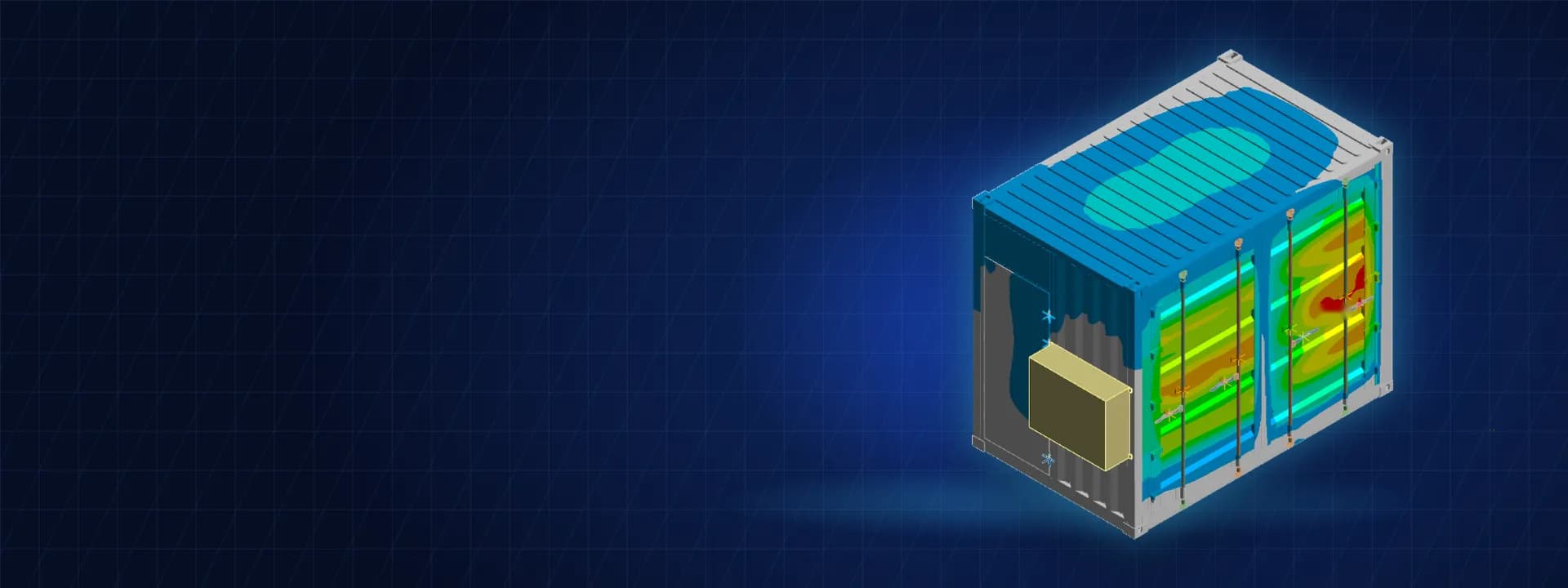
In the BESS container study, a dilution ratio said the ventilated container stayed at 10 percent of the lower flammable limit. The CFD model showed hydrogen layering under the roof, with a fifth of the air above the NFPA 69 limit in the usual fan layout. In the liquid cooling manifold, the CDU still saw its full 64 L/min while one fouled plate had dropped to 4.46 L/min, a condition the total flow can never reveal.
In both cases the hand calculation was correct for what it computed. It answered a different question from the one the decision depended on.
4. The quick run in the middle
Between the two sits what I call a quick run: a coarse model with simple boundary conditions, usually a day or two of work. Its job is to find out whether the average is good enough. If it shows a well-mixed space or an even split, the hand calculation stands and the client now has evidence for it. If it shows layering, short-circuiting or a starved branch, that becomes the argument for a fuller study, and the client can see the reason before committing the budget.
The risk is that a quick run gets quoted as a final answer. A coarse mesh will often show the right flow pattern while getting local values wrong, so I report its pictures and its trends and keep its peak values out of design tables. Once a number is going to be compared with a limit, the model needs a mesh check at that location, which I argued for in my earlier note on mesh checks.
5. What justifies a full study
For me a full study is justified when the simulation carries most of the weight of the decision and a wrong answer would be expensive or unsafe. Explosion control in an energy storage enclosure sits there, and so does first air over open product in a Grade A zone.
A full study then means more than a finer mesh. It means a mesh check at the governing location, a look at how the result moves with the inputs nobody is sure of, comparison with test data or a published benchmark where one exists, and a plain statement of what the model cannot tell you. Where the result only supports a choice that commissioning will verify anyway, or where being wrong means swapping a fan on site, much of that apparatus is hard to justify, and I would rather say so at the proposal stage.
6. Questions I would ask before commissioning a study
If you are buying simulation work, ask the consultant to name the decision the result will support and to show you what the hand calculation says. Then ask what physical effect the hand calculation cannot capture, and whether that effect could change the decision. If nobody can name one, the hand calculation may well be enough, and you have saved money. If someone can, ask how the proposed model will show that effect and what mesh check and validation will sit behind the number that matters.
Where Shirsh fits
At Shirsh Technosolutions we usually start with the hand calculation and a short note on what it cannot see, then agree the level of modelling with the client from there, using ANSYS Fluent, ANSYS Mechanical, OpenFOAM or CalculiX as the job needs. If you are deciding how much analysis a design question deserves, please get in touch.
References: ASME V&V 40-2018, Assessing Credibility of Computational Modeling through Verification and Validation: Application to Medical Devices (risk-informed credibility framework: model influence, decision consequence, model risk). NASA-STD-7009B, Standard for Models and Simulations, approved 5 March 2024 (section 4.1 on scope by criticality; section 3.2, M&S assessment thresholds). Worked numbers quoted from the published Shirsh Insights linked above.
Related case studies
Want to Apply This to Your Product?
Our engineers can help you implement these techniques on your specific components and assemblies.
Get insights like this in your inbox
Engineering deep-dives, simulation tips, and industry analysis. No spam, unsubscribe any time.