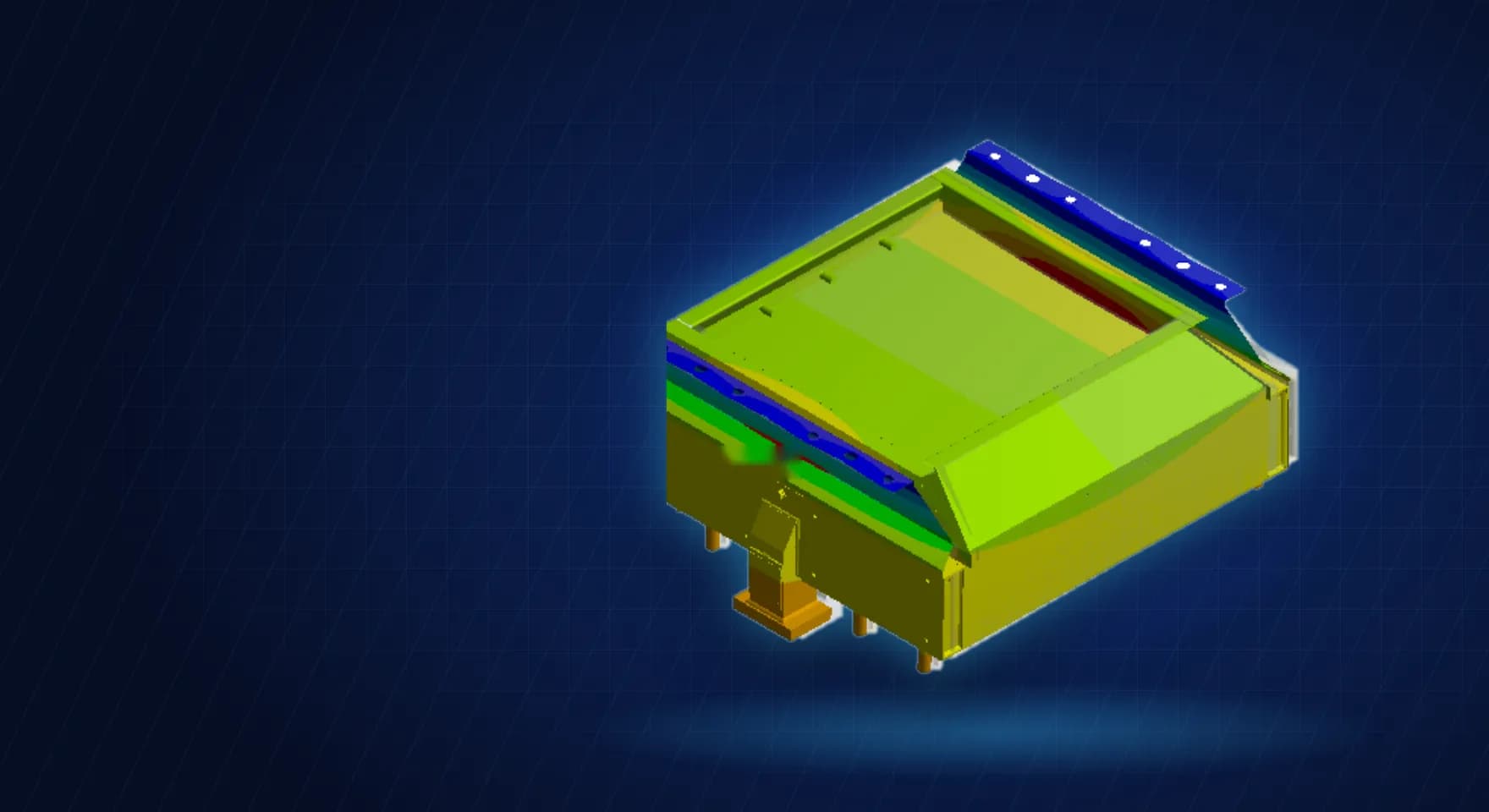
Vibration, Shock and Fatigue Qualification by FEA
Modal, random vibration, shock and fatigue analysis to rail, defence and industrial standards, so equipment can be qualified or de-risked before it goes on the shaker table.
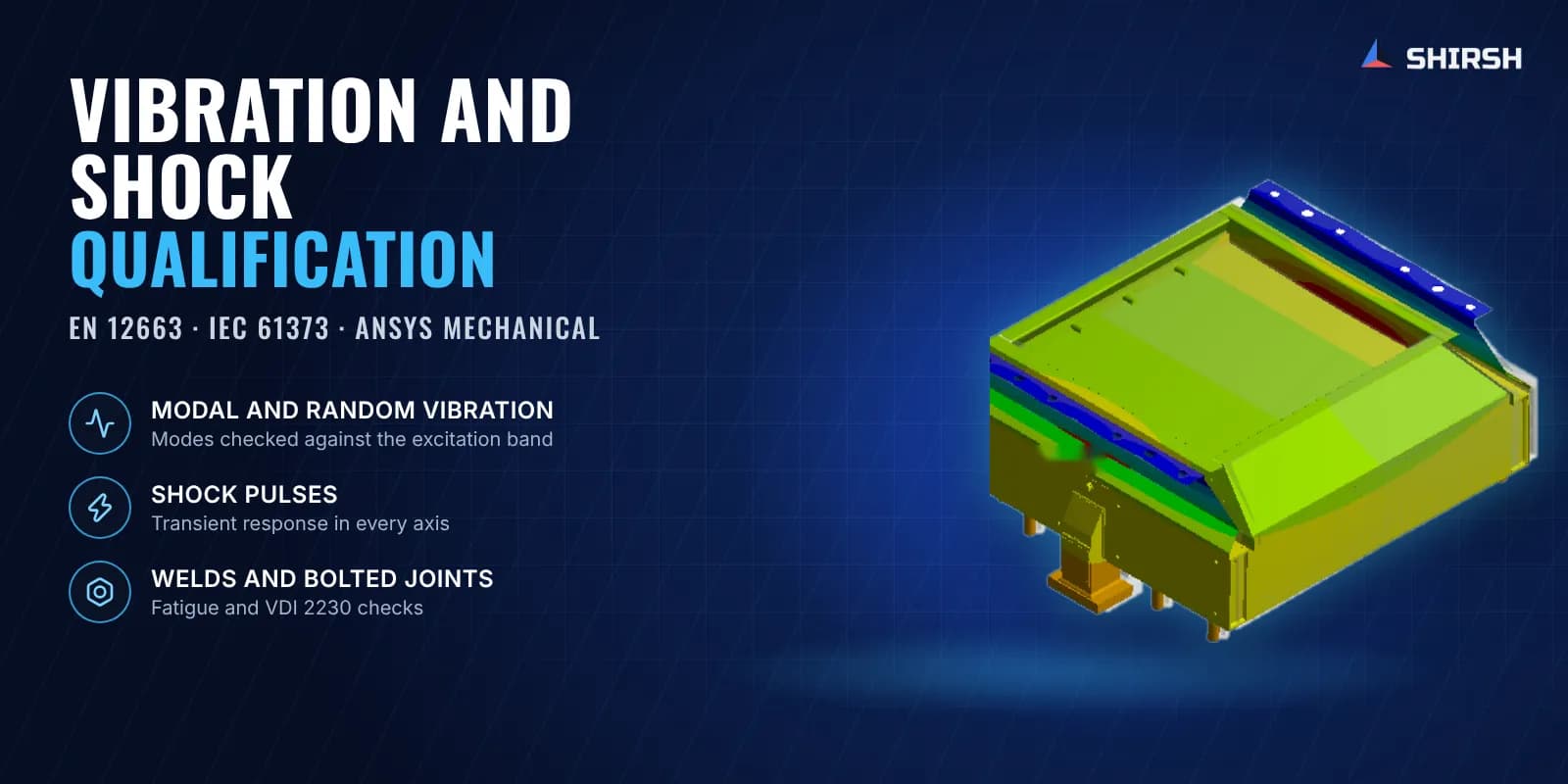
What this solution covers
Equipment mounted on rolling stock, vehicles, ships or machinery has to survive vibration and shock for its whole life. Shirsh Technosolutions qualifies such equipment by analysis in ANSYS Mechanical, to the standard the customer names, and finds the weak points before a prototype goes on the shaker table.
We work on heat exchangers and coolers, electrical cabinets and enclosures, transformers, brackets and mounting frames. The analysis covers natural frequencies, random vibration, shock pulses and fatigue life, with bolted joints and welds checked alongside the parent metal.
Pain points we address
Shaker tests failing late, after tooling and prototypes are already paid for
Natural frequencies sitting inside the excitation band without anyone knowing
Bolts loosening or welds cracking in service
Customers asking for evidence on every component, not only a pass or fail test
Aluminium and steel in one assembly, where thermal growth adds to the vibration loads
What we solve
Modal analysis to place natural frequencies against the excitation band
Random vibration response to IEC 61373 and customer PSD profiles
Shock response to half-sine and other specified pulses
Static proof loads and fatigue to EN 12663-1, with S-N assessment to EN 1993 and EN 1999
Bolted joint checks to VDI 2230, including preload and thermal effects
Design changes that shift modes or bring hotspot stresses down
How we approach it
- 1
Agree the standard, load categories and acceptance criteria with the client at the start
- 2
Build a shell and solid model with the real mounting points and pretensioned bolts
- 3
Run modal analysis first to see which modes will respond
- 4
Apply random vibration, shock and static proof loads as the standard specifies
- 5
Assess welds and parent metal with their own safety factors and fatigue classes
- 6
Check the bolted joints separately to VDI 2230
- 7
Report component by component in a form the reviewer can trace
Deliverables
Qualification report with load cases, results and code checks
Modal summary with mode shapes
Random vibration and shock results per component
Fatigue assessment for welds and parent metal
Bolted joint calculation to VDI 2230
Expected outcomes
Weak points found and fixed before physical testing
A qualification report that supports design review and type approval
A clear margin for every component, bolt and weld
Lower risk of repeat shaker tests
Why Shirsh
Standards such as EN 12663 and IEC 61373, and the customer's own specifications, each define the loads and the pass criteria differently, and the evaluation has to follow them closely to be accepted. Our engineers know these routes, model mixed-material assemblies and bolted joints properly and write reports that a design review can trace component by component.
Where this lives
Industries served
Software used
Related case studies
FEA Qualification of a Locomotive Transformer Oil Cooler to EN 12663 and IEC 61373
Static, fatigue, random vibration and shock FEA of a rail transformer oil cooler, qualified to EN 12663-1 and IEC 61373 by analysis.
ReadIEC 61373 Vibration and Shock FEA of an Aluminium Rail Transformer Oil Tank
IEC 61373 random vibration and shock FEA of an aluminium transformer oil tank for electric locomotives, run in ANSYS at functional and long-life levels.
ReadWant to learn this?
We also offer ANSYS & SolidWorks training courses.
At a glance
Discuss your project with our engineers
Tell us about your simulation, validation or design challenge.