
Electronics Cooling (Data Centers, Electronic Products)
CFD and conjugate heat transfer for electronic enclosures, power panels and data halls, to keep every component inside its temperature limit.
Industry overview
Power density keeps rising in data halls and in compact electronic products, while the space for air to move keeps shrinking. A component that runs a few degrees hotter than planned fails sooner, and a badly placed fan or vent can leave a hotspot that extra airflow alone will not clear.
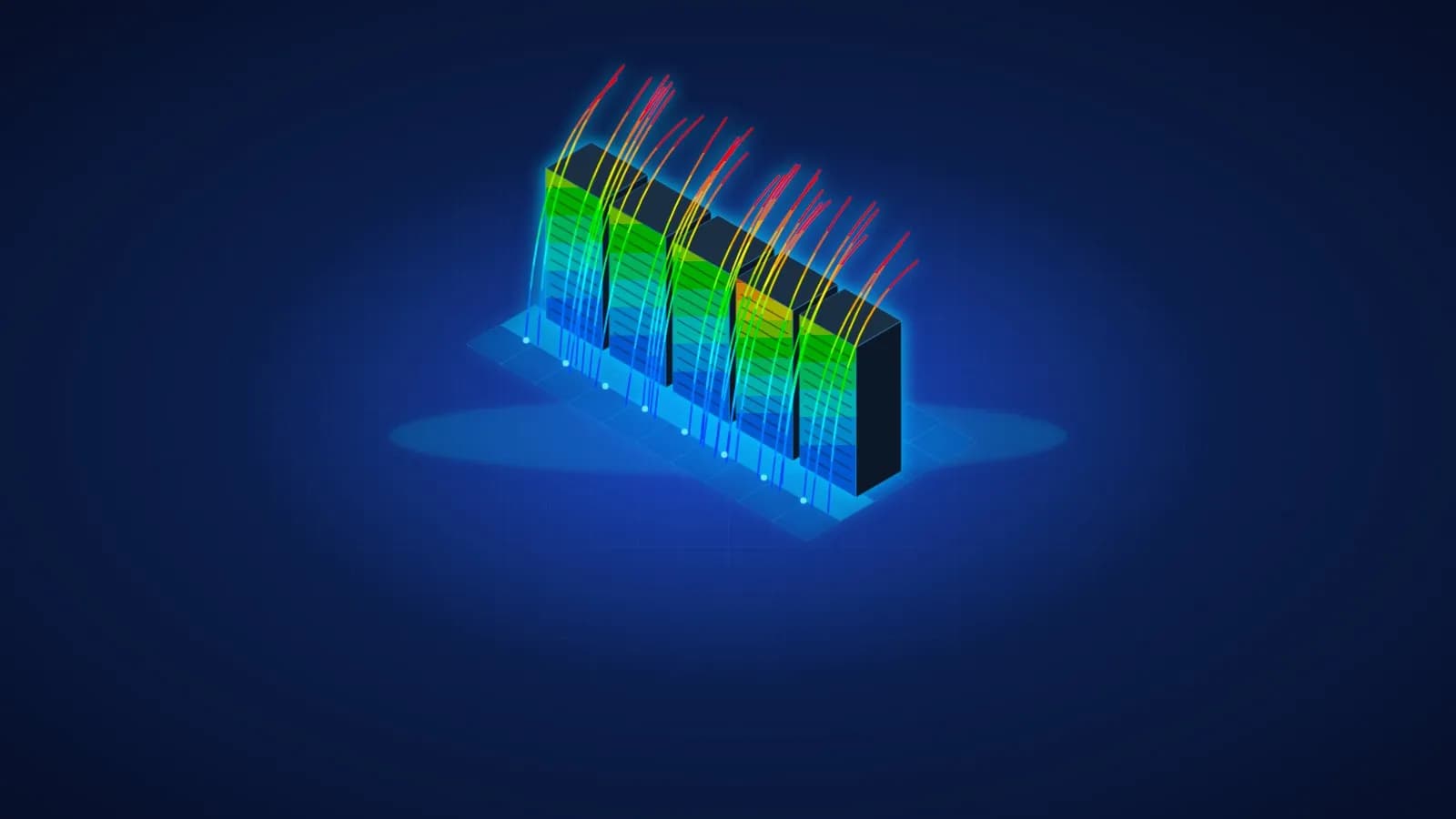
Shirsh Technosolutions models these problems with CFD in ANSYS Fluent, solving airflow and heat conduction together. We look at enclosures, heat sinks, panels and racks, and at room level we check hot and cold aisle layouts. Results come as temperatures at the components, along with practical changes to fans, vents, baffles or layout.
Industry challenges
High heat loads in small enclosures with little room for airflow
Recirculation and bypass air in data halls that create hotspots at rack inlets
Choosing fans, vents and heat sinks before a prototype exists
Condensation risk where cooled air meets warm, humid surfaces
How we help
- 1
Conjugate heat transfer CFD of enclosures, panels and heat sinks in ANSYS Fluent
- 2
Room-level CFD of data halls and server rooms, checking rack inlet temperatures against ASHRAE TC 9.9 guidance
- 3
Fan, vent and baffle layout studies to remove hotspots
- 4
Thermal-structural FEA in ANSYS Mechanical where temperature drives stress or deformation
Key trends
Liquid and direct-to-chip cooling for high-density racks
Edge data centres and outdoor cabinets with limited cooling capacity
Higher power electronics in EV chargers, inverters and battery systems
Energy efficiency targets for data centre cooling, tracked through PUE
Want to learn this?
We also offer ANSYS & SolidWorks training courses.
Relevant solutions & software
At a glance
Bring code-compliant engineering to your next project
Tell us about your engineering needs — sizing, validation, troubleshooting, training.