Redefining Engineering Simulation.
Over 50 years of combined expertise in CAE consulting, advanced simulation, and engineering software solutions.
Est. 2009
16+ Years Excellence
50+ Years
Combined Expertise
Global Standards
IS, ASME, API, IEC & More
100%
Client Satisfaction
Trusted by Industry Leaders
Core Solutions
End-to-end CAE capability — from parametric CAD modeling through high-fidelity FEA/CFD to actionable engineering insight.
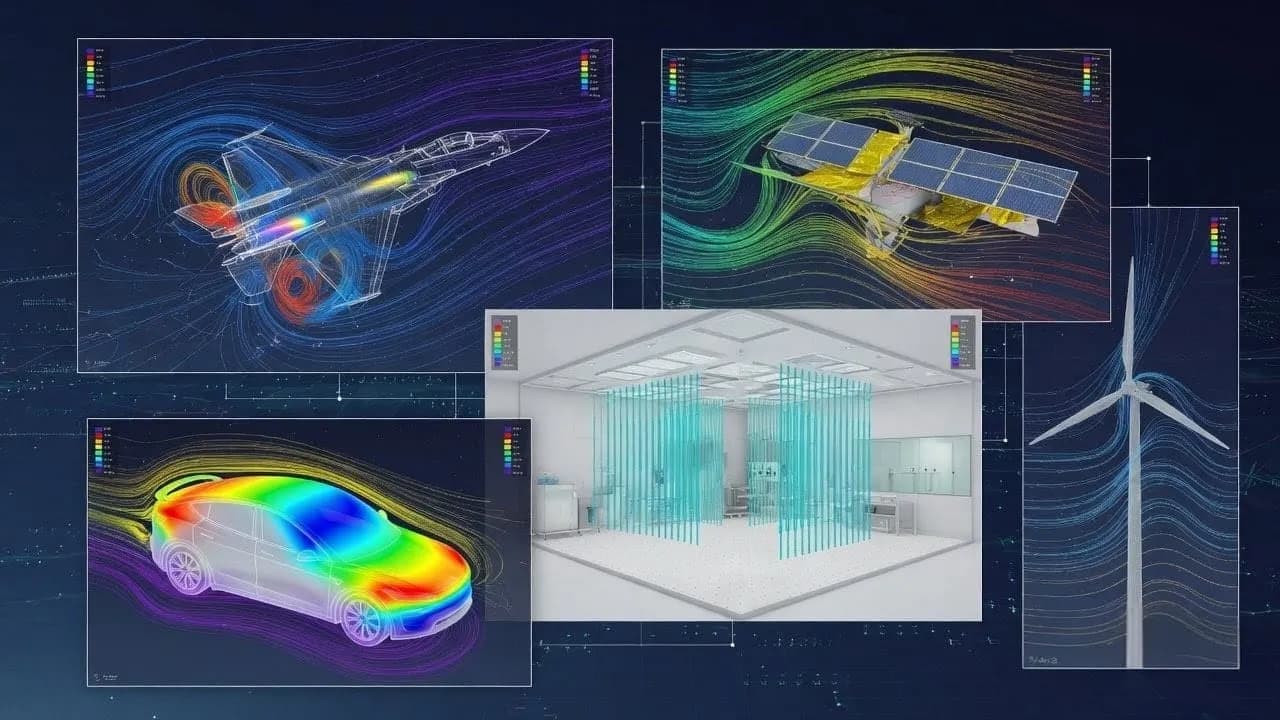
Computational Fluid Dynamics (CFD)
High-fidelity CFD simulation for aerodynamic, thermal, and multiphase flow problems using ANSYS Fluent and OpenFOAM.
Learn more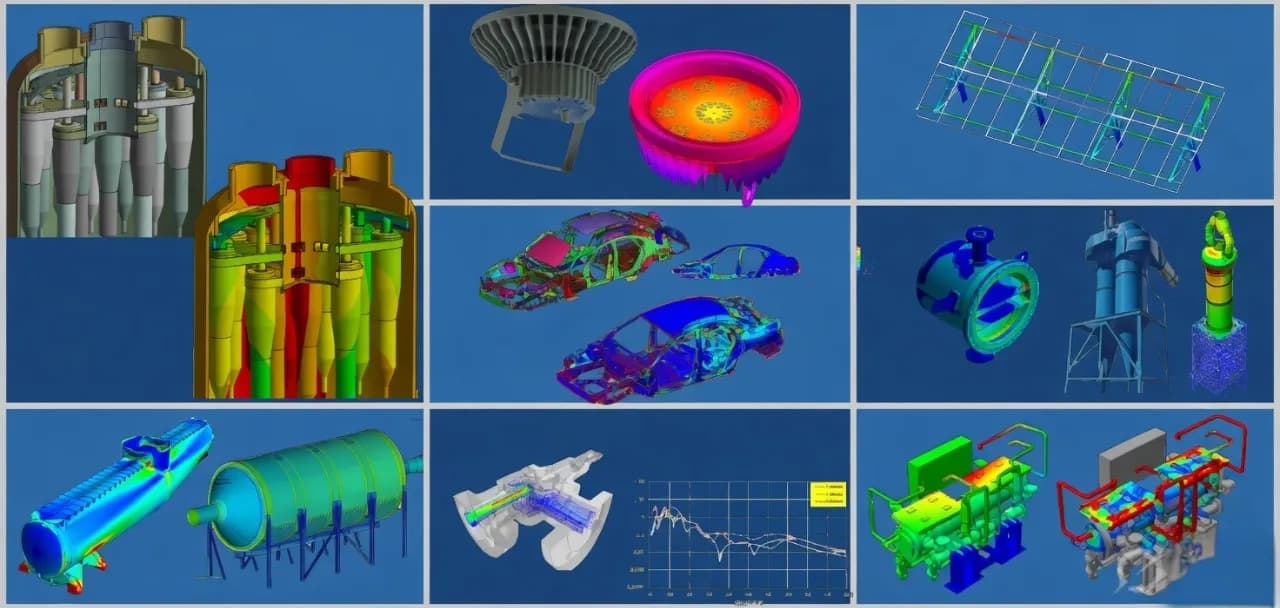
Structural FEA Analysis
Comprehensive finite element analysis services for structural integrity, fatigue life, and design optimization of industrial components and assemblies.
Learn more
3D Printing Service
High-quality 3D models and prototypes using polymers like ABS, PLA+, and Nylon.
Learn moreDomain Expertise
Deep simulation experience across sectors that demand engineering rigour.

HVAC & Thermal Systems
CFD-driven airflow and thermal performance simulation for heating, ventilation, air conditioning, and industrial thermal equipment.

Heavy Machinery & Industrial Equipment
Structural analysis and durability simulation for capital equipment operating under severe cyclic and environmental loading.

Automotive Components
Simulation-driven design verification and performance optimization for automotive structural and thermal components.
Software Solutions
Authorized reseller and implementation partner for industry-leading simulation tools.


Upcoming Training
Hands-on courses taught by practising simulation engineers.
16+ years of engineering excellence — from a single crane FEA project to a full-service simulation consultancy.
Founded - The Humble Beginning
Our founder Mr.Amit Nirmal, establishes the company to tackle a specific challenge: a high-level FEA project for an EOT crane.
Founded - The Humble Beginning
Our founder Mr.Amit Nirmal, establishes the company to tackle a specific challenge: a high-level FEA project for an EOT crane.
Building a Reputation
Completed 10th successful project. Expanded expertise in Process Industry, Heavy Engineering, Automobile, Pump & Valves.
Building a Reputation
Completed 10th successful project. Expanded expertise in Process Industry, Heavy Engineering, Automobile, Pump & Valves.
Expanding Our Horizons
Services grew beyond FEA to include full-scale mechanical design, structural auditing, and CFD. Started ANSYS & SolidWorks Training Centre.
Expanding Our Horizons
Services grew beyond FEA to include full-scale mechanical design, structural auditing, and CFD. Started ANSYS & SolidWorks Training Centre.
Growth & Recognition
Team grew to 15 expert engineers. 300+ successful projects completed. Expanded overseas.
Growth & Recognition
Team grew to 15 expert engineers. 300+ successful projects completed. Expanded overseas.
Innovating for the Future
Heavy investment in ANSYS, NFX, and open-source tools. Released IMDAS — FEA-based Solar MMS Design and Verification software.
Innovating for the Future
Heavy investment in ANSYS, NFX, and open-source tools. Released IMDAS — FEA-based Solar MMS Design and Verification software.
Your End-to-End Partner
A full-service engineering consultancy managing projects from concept to completion.
Your End-to-End Partner
A full-service engineering consultancy managing projects from concept to completion.
Insights & Knowledge
Technical articles and thought leadership from our simulation practice.

Join Our Team
Build your career at the intersection of engineering and simulation. We're looking for people who love solving hard problems.
Ready to solve your engineering challenge?
Our team responds within 1-2 business days